
A critical approach within Geography and Placemaking has, for me, always been a key objective for understanding the world and contributing this knowledge to creating a better world. This is what most people believe to be the basic principle of all sciences. Therefore, on a rather intuitive and superficial level, this might sound self-evident. At a bit deeper level, however, it shows that there is a  substantial debate about what such a critical approach is all about and how it should be applied. See e.g. my earlier entry on the Difficulties with Critical Geography.
 Recently, I was reading a recently published book (in German) on Phenomenology and Critical Theory (2026), edited by Alexis Gros, Jochen Dreher, and Hartmut Rosa, and stumbled over a very accessible overview of this debate on Critical Approaches, written by Prof. Gustavo Leyva, a brief summary of which I would like to share with you here.
I. Horkheimer’s Programme
The term Critical Theory in philosophy and the social sciences was coined by Max Horkheimer, building on the earlier work of Georg Lukács, Siegfried Kracauer, and Walter 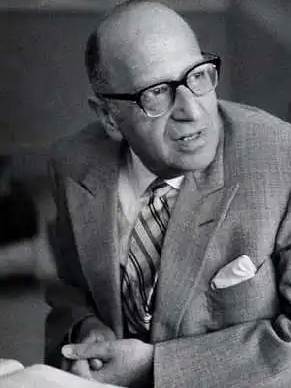 Benjamin, in his inaugural speech upon becoming director of the Institute for Social Research in Frankfurt in 1931. He defined the main objective of the Institute as researching and understanding the collective fate of humanity and society. Instead of focusing on individual phenomena, it aimed to examine these phenomena in the context of and in relation to broader structural societal and historical aspects. In contrast to earlier ideas of critique, his understanding and theorising was also itself seen as part of this relation. Traditional theory attempts to analyse reality from a distanced and neutral point of view, to make recommendations which are expected to improve our objective knowledge and possibilities for action. As such, traditional theory is firmly rooted in the thinking of the idealistic ‘I’ (Kant, Fichte) and in the logical historic processes (Hegel), irrespective of real societal experiences and practices. In Horkheimer’s view, however, social research itself was seen as partly determined by concrete societal conditions, as part of societal practice and historical processes. Social science lost its innocence and neutrality, and from thereon would and should play an important role not just in understanding the societal conditions of social phenomena but also in changing these conditions, aiming to improve social relations as well as relations with the material environment. The critical reflection on societal processes, therefore, does not take place in a purely intellectual sphere, but rather is embedded in a web of struggles over certain ways of life in reality.
Understood in this way, Critical Theory does not so much advocate the accumulation of knowledge for its own sake but rather the emancipation of human beings from enslaving conditions. Critical Theory is therefore a theory guided by the concern that subjects should constitute themselves as conscious subjects and that society should become an association of free human beings, in which they can actively determine their own ways of life, based on the vision of a society in which justice prevails in relations between people. In this way, the critique proceeds not transcendentally but immanently, by demonstrating how the project of emancipation, which guides it, is already present in the structure and dynamics of social actions and interactions, in social practices, and in the existing struggles and forms of organisation and structuration (Leyva, 2026, p. 173). Critical Theory combines the theoretic and reflective view of the thinker from a distance based on reason and rationality with the immediate closeness to the actual social processes, experiences, feelings and social representations of concrete groups of people and actors, in the framework of their daily struggles for freedom. This critical approach is both critical against too simplified utopian solutions which may pop up from the local direct experiences of these concrete groups of people or individuals as well as critical against abstract solutions designed from a universalistic perspective devoid of the concrete situations and experiences of the people involved.
Critical theory, in the first instance, attempted to reformulate the traditional critical approach towards society formulated by Karl Marx and his followers by getting rid of the exclusive focus on materialist (economic) conditions and of the idea that only the proletarian class would be able to enforce emancipation by general revolt. In addition, the focus of the critique shifted from the stagnating and alienating tendencies of the capitalist economy towards the more general expansive and extractive dynamics of capitalism, which destroys not just humans but also natural resources and nature in general. At the same time, the ideological critique of morals and culture of the bourgeois society was nuanced and refined by means of psychoanalysis and cultural analysis. At the same time, the inherent tendency towards fascism, identified by Marx, was differentiated by analysing how unconscious instinctual propulsive energies may be channelled, leading people to experience their oppression as ‘liberation’ and to strive for it. See e.g. Adorno’s (2019) The Authoritarian Personality.
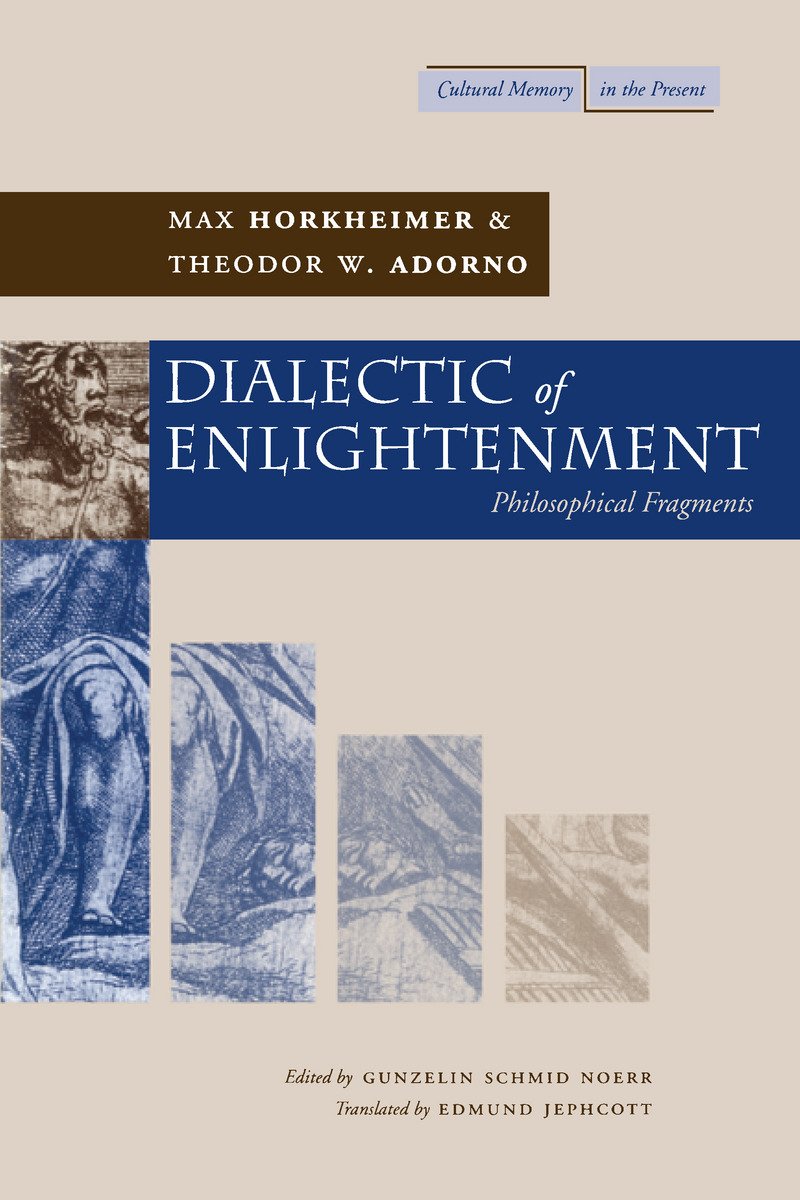 In the 1930s, the research of the Institute for Social Research developed a coherent critical theoretical approach focusing on how bodies are entirely subjectified through the rule of rational administrations and organisations and how repressive modes of socialisation as well as social control, which permeated virtually all areas of social life and was exercised through the mass media, contribute to it. All these elements were seen as inherently associated with modernity and enlightenment, suggesting a rather negative conceptualisation of the original emancipatory project of enlightenment. Paradigmmatically, this is exemplified in Horkheimer and Adorno’s (2007) Dialectic of Enlightenment, in which both aspects of enlightenment are described in their mutual (dialectic) relationship. This seminal work became a cult classic of the 1968 student protests. The work expresses a profound cultural pessimism that must be viewed against the backdrop of history (Nazism, communism, capitalism) at that time. The authors tried to demonstrate that reason can turn into unreason, and progress into regression. In doing so, they opposed blind faith in progress and the Enlightenment. They argue that the
Enlightenment’s emphasis on reason and progress, aiming to free the world from the spell of superstition and mythology, has led to the domination of nature and the suppression of human individuality. Instead, Adorno suggested the notion of negative dialectics as a critique of the positive, idealistic dialectics of Hegel and the Marxist dialectical materialism that grew out of it. Negative dialectics rejects the idea of a final synthesis or reconciliation of contradictions, instead emphasising the importance of maintaining the tension between contradictory elements and resisting the temptation to subsume particulars under supposedly idealistic, abstract, totalizing concepts.
For Horkheimer and Adorno, the Enlightenment itself has turned into mythology. As rationality spread, humankind has increasingly become alienated from human nature through the development of the economically rational capitalist and liberal economic system. The individual cannot identify with the main purpose of economic development anymore and becomes totally subordinated to the economic powers, as Marx suggested. Horkheimer and Adorno, however, describe how this alienation is not limited to the economic sphere, but also extends to cultural life, mass media, and the way society is organised in general. In addition, humankind is not just alienated from human nature but also from nature in general. Human beings and nature then become merely objects of domination and manipulation. There is no real progress: rather than leading the individual to freedom, the Enlightenment has merely created new forms of slavery and a totally administered world. Religion has been replaced by bourgeois morality, which, however, cannot provide people with social security. Modern mass culture has become a product of industrial production and serves as an instrument of social control. The exclusion of opposing groups, like Anti-Semitism, has become a defining feature of modern barbarism, into which people are sinking despite – or perhaps precisely because of – the Enlightenment. ‘The Dialectic of Enlightenment’ of Horkheimer and Adorno, as the main proponents of Critical Theory, offered a razor-sharp analysis of the contemporary world of its time, without, however, offering a solution or a way out of the predicament.
II. Habermas’ Actualisation of Critical Theory
Jürgen Habermas (1984) is often seen as representative of the second generation of Critical Theorists, and, as  can be derived from my publications, he has been an important source of inspiration for me. He attempted to bring the (positive) ideal of enlightenment back into societal reality and to avoid reducing enlightenment to a (negative) totalising project of domination and subjectivation. He designed an extended version of the modernist concept of reason and rationality, which is not limited to sheer instrumental rationality, and he re-aligned critical social theory with the empirical social sciences. He remained faithful to the critical project, but reformulated the categorical framework and criteria for critical analysis of society by inferring ‘reason’ and ‘rationality’ from the real-life communicative practices of subjects and from their practical use of language as the main means for non-violent human interaction. This extended concept of rationality does not depend on individual subjectivism or a transcendental consciousness but is rooted in intersubjectivism. In addition, his concept of society refers to both the broader systemic- as well as to the ‘local’ lifeworld level. Through argumentative interaction and understanding, both the lifeworld as well as the system world are continuously socially
 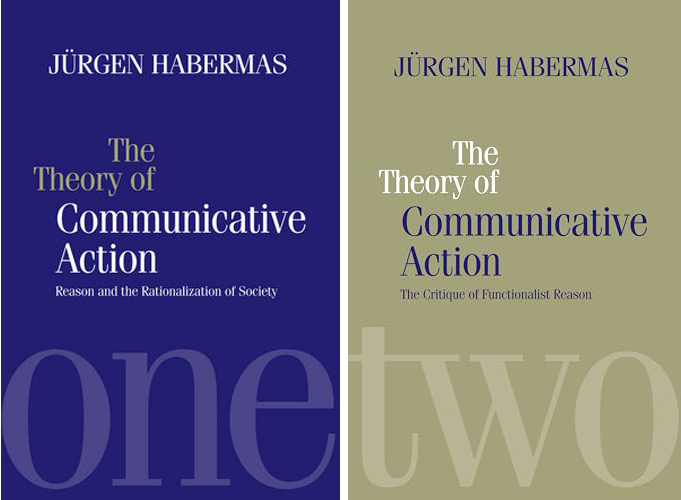 (re-)constructed and looses its totalising feature. By analysing the pathologies of modern societies, or, those situations in which the system world tends to dominate the lifeworld and is limiting the communicative rationalisation of society, and by the rational critical reflection of the results, in his view, steps towards the transformation of society can be made and modernity can be developed further instead of giving up the project of progressive enlightenment as a whole, as the first generation of Critical Theorists seemed to suggest.
III. Current Positioning of Critical Theory
The current situation is different from the situation in which the first-generation critical theorist developed their ideas and also different from the times in which Habermas re-conceptualised Critical Theory. Already, Horkheimer suggested that Critical Theory is part of the historical development and needs to transform itself over time. Horkheimer’s own ideas were developed during an era of totalitarian capitalism, the paradigmatic expression of which was found in the economic system of Nazism. Later on, in the 1970s and 80s, Habermas tried to develop these ideas further by analysing the new conditions of the more progressive forms of capitalist societies. He reflected on the post-war welfare state and on how the institutional network of the rule of law and, more generally, democratic institutions could regulate capitalism and deal with its imminent crises. Nowadays, however. the capitalist welfare state is gradually undermined by expanding global capitalism and has weakened the democratic system, which increasingly gives way to a post-factual populist politics which refers more to emotions than to arguments to explain why justice, equality and sustainability cannot be reached. In addition, hitherto certain fields of domination were by and large left out from the main thrust of Critical Theory, which have grown in importance nowadays. One may think of the fields of ethnic, racial, and colonial, as well as gender relations. It is very much an open question how, under these circumstances, Critical Theory needs to be transformed and needs to re-invent itself.
IV. Perspective for further Development of Critical Theory
The former lines of Critical Theory are to a large degree still valid, even though their normative criteria are increasingly under scrutiny. But these lines of critical thought need to be enhanced with new forms of critique and need to include the interaction between these lines, respectively the interaction between the different societal mechanisms of domination in these different fields.
Thus the task of criticism will be to decipher, articulate and theoretically unearth the normative horizon that is expressed in experiences of the violation or disregard of justice, equality, freedom and autonomy of human beings. It is these norms which animate and drive those struggles and social protests, as well as the various forms of social resistance against the different manifestations of oppression and injustice, inequality and domination.
These normative guiding principles act as driving forces that permeate society and, at the same time, spur it on to look beyond itself and its current configurations by questioning the distorted images of freedom and autonomy that have been shaped by the very dynamics of modern societies, to turn them into a critique of the various forms and relations of domination, of the actual exclusions and of the forms of oppression in today’s societies. These struggles may be endless and may never lead us to a state of justice, freedom and equality. Nevertheless, they will enable us to make societies – and, more generally, the world in which we live – a little more liveable, by allowing a few islands of autonomy to emerge, even if these may never be able to develop into an entire continent or an entire world (Leyva, 2026, p. 195f.).
References
Adorno, T.W. (2019 [1950]) The Authoritarian Personality. Verso, London.
Habermas, J. (1984) Theory of Communicative Action. Vol. 1: Reason and the Rationalisation of Society & Vol. 2: Lifeworld and System: A Critique of Functionalist Reason. Beacon, Boston.
Horkheimer, M. (2002 [1937]) Traditional and Critical Theory. In: Horkheimer, M. Critical Theory. Selected Essays. Continuum, New York (pp. 188-252).
Horkheimer, M., & Adorno, T.W. (2007 [1947 in German]) Dialectic of Enlightenment. Stanford University Press, Redwood City.
Leyva, G. (2026) Kritische Theorie. Projekt, Probleme, Perspektiven. [Critical Theory. Project, problems, perspectives. In: Gros, A., Dreher, J. & Rosa, H. (eds.) Phänomenologie und Kritische Theorie [Phenomenology and Critical Theory]. Suhrkamp, Berlin. (pp. 163-196).


