Workshop “Coping with overtourism in Europe”

On November 10-11, 2022 Prof. Gert-Jan Hospers and Sebastian Amrhein organised a successful multi-sited workshop on Overtourism in Europe, taking place both in Kleve at the University of Applied Science, just across the border and at the Radboud University Nijmegen.

During the Covid-19 crisis, the problem of overtourism seemed to have disappeared… What a relief for some places. It also made us aware of the forgotten qualities of these tourist places. At the same time new touristic places, especially those away from the crowded hotspots were (re)discovered. The countryside resorts or individual accommodations were popular for staycations. But currently, overtourism is back again. and maybe in the first instance in even more severe forms as there is a real need for catching up/meeting up and breaking out of our Covid-19 isolation again.

Maybe this is also a crucial window of opportunity to release measures to curb overtourism structurally.  To do so one needs a thorough understanding of what overtourism really is and what causes and effects it has, beyond the superficial and unscrutinised impression that this is a bad thing, even though we all also experience how enriching, recuperative and socially rewarding touristic experiences are. At the same time, for many others, it is also a highly needed source of income. So we need to be careful about oversimplifying and (pre-)judging overtourism.

In the same way, as migration is thought to be the cause of everything evil in our society in the eyes of many right-wing populists, we need to be careful about blaming overtourism for everything evil at the touristic hotspots, as that might distract us from the real causes of some of the problems. For example at some destinations, we notice the precarious working conditions of the workers in the tourist industry, but often migration and employment laws, and not the tourists themselves are the real cause. Sometimes we also observe that certain groups are very expressive about their opposition to tourism, while others who are less vocal are much more ambivalent in their opinion, or are more dependent and cannot allow themselves to be critical, resulting in rather one-sided perspectives. The Covid-19 crisis in tourism therefore can also be rather revealing about the real character of the effects of overtourism or the real reasons for the opposition to overtourism. This kind of critical stance towards the phenomenon of overtourism was also the starting point of this small expert workshop, with the aim to search for the real and core aspects of overtourism, in the hope to find better and more effective ways to cope with it and to make these tourist destinations to better and (socially and ecologically) more sustainable places.

It is therefore certainly useful to first critically deconstruct the way ‘overtourism’ is used in the different debates. What is really meant or unstated implied with the term ‘overtourism’? (Eva Erdmenger). Did we leave out the host community in the way tourism was propagated? (Andreas Kagermeier). What role do digital platforms play in overtourism? (Sina Hardaker).  The local circumstances of overtourism may also differ from place to place (Amsterdam, Prague, and many more of the usual iconic touristic hotspots, but also small places such as Giethoorn or Beuningen) were addressed by several of the speakers (Fabian Weber, Miroslav Roncak,  Gert-Jan Hospers). This also lead to the discussion of different modes of dealing and coping with the return of overtourism after the pandemic (Jürgen Schmude, Lola Kuenen, Robert Fletcher), e.g. by focussing on more quality tourism, which then also coined the question of where the others should go? or by co-designing the tourist attractions together with the local community (Roos Gerritsma). Finally, also those aspects which might only sideways be related to tourism but are often central aspects of the opposition against overtourism, such as the bad labour conditions (Moritz Langer) or the circumstances which make protest more or less vocal (Sebastian Amrhein) mentioned above were discussed, providing a much more nuanced picture of today’s overtourism and the way they constitute the quality of places.

PhD Defence Vanessa Meinen

On September 12, Vanessa Meinen successfully defended her PhD Thesis entitled: Steering Sustainable Events Performance. Towards a more balanced assessment of sustainable association events (Click on cover to download the full version). Together with Prof. Marion Halfmann of the Hochschule Niederrhein, I had the honour of supervising her.

We know from academia, that interacting with our fellow scientists worldwide on the occasion of conferences, consortia meetings, etc. is far from sustainable, especially when we look at the environmental impact of all the travelling involved, not even to speak of the local impact of the event itself. Especially during the past Covid-19 pandemic, we have also experienced many possible alternatives for communicating and exchanging ideas with our fellow scientists. At the same time, however, we have also experienced the loss of the embodied and experiential meetings with our colleagues. It is clearly too simple to think of the sustainability of these kinds of events by only reducing the ecological impact by replacing travel with digital remote communication. One needs to look at the sustainability of these events in a more balanced and multi-modal way.  What is true for scientific meetings, is even more true for other kinds of meetings and events with stronger experiential aspects., like in many touristic events. Vanessa Meinen, based in research and policy-making in the field of sustainable tourism, dedicated her PhD research to exactly this topic well before the pandemic hit us and before we became aware of these different aspects. As such, she was well ahead of her time.

One of her major cases was a large scouts event in Germany. A topical case where it is clear that the embodied experiential aspects are very prominent, and also the location, in the green countryside, is almost by definition not sustainable from an ecological point of view. But such an event is not just about a sheer exchange of information, which could be easily replaced by digital media. This is an event where being physically together in a very special setting and environment is the core business of this event. This is very comparable with many other touristic attractions and events. It would be too easy to disqualify these events as unsustainable. One really needs to look at these kinds of events in a more balanced way in which also other aspects, like e.g. the social, experiential and economic aspects need to be taken into account.

When I was on holiday in Switzerland last summer, a similar event took place in the mountain valley Goms. 30’000 scouts met in this remote location. It was an immense effort, to do this in as much as possible sustainable way, while at the same time also keeping the once-in-a-lifetime experience of a scout alive. It comprised 800 scouting groups, 5000 assistants, 500 volunteer organisers, a budget of 25 million Swiss Francs, a 120 hectares camping site, 5000 Kilos of bread every day, etc. etc. The following video gives a brief impression of this huge event. For me, this underscored once more the relevance of Vanessa Meinen’s research.

It also exemplified, how difficult it is to collect comprehensive data at such an event. Doing a survey among the participants, while they are all having other priorities at this unique event at that moment, does not allow the collection of data that would enable sophisticated statistical modelling of the behavioural aspects of the sustainability of such an event. But even limited and more descriptive data tell us more than no data at all, so sometimes scientific ambitions need to come down from their high horse, and use the data we do have in a pragmatic way to serve policymaking.  In this respect Vannessa has come up with a wealth of data and knowledge on the policy aspects of the sustainability of these kinds of events, allowing for a more balanced judgement. This is also how the PhD thesis of Vanessa should be read. It clearly shows how we could improve the assessment of the sustainability of these kinds of events and how we might strive towards a more balanced way of managing the sustainability of association events.

At the same time, it also shows that places, settings, and embodied experiences, do matter also in relation to events.

Job Opportinity: Full Professor of Human Geography

After almost 25 years at Radboud University, my retirement is in sight. Even though it sometimes still feels as if I just arrived at this university, I more and more am confronted with situations that I am the oldest in certain bodies and fora within academia, and that I am somehow also a historical institutional consciousness with the know-how and know-why, others and even my own supervisors are lacking. This is also a new kind of experience for me. On my birthday in  August 2024, I will be given emeritus status, after which I will still take care of a number of PhD candidates whom I supervise and who will not have their PhD projects finished by that time. Many others will finish before my retirement. This kind of supervision work is something I really enjoy, as it is strongly content-related and links up to my own personal research interests. Until then, I will slowly but surely hand over my current responsibilities to my successor and focus more on some of my personal research interests and also – based on my own experience with online teaching – take care of a university project on the proliferation of professional online teaching. After my retirement, I will occasionally still do some teaching at different universities and be active in international networks. I am already noticing how joyful it is to have more time to read, think and write, and for all those things which make scientists tick.

As the chair of the Geography team, since I started at Radboud university, with the ambition to lift the group to a new level in research and teaching and lead it to the current topical research frontiers, one hardly has time to focus on personal research interests or further building up one’s own CV. The main priority has been the positioning of the Geography team, looking for a balance in different competencies and stimulating the intellectual development and debates within the group, positioning and assisting the (international) career development of the members of the team, while also keeping up our high ambitions.  The last 25 years at Dutch universities were, however, also characterised by a strong urge towards (individual) excellence and at the same time by a continuous succession of restrictive austerity measures. This has had detrimental effects on universities in general and is also totally contrary to the kind of team science, which I believe is the only way to make real science thrive. In other entries on this site I already critically addressed the thrust towards ‘Excellence Stalinism‘. High-quality science, in my view, can only develop through, intensive debate at eye level on a level playing field and through cooperation on joint research interests. Even when times were not in favour, this is exactly what I tried to establish even though this often implied swimming against the currents. This sometimes also implied that the university was not always supportive in reaching these objectives and one needed to be alert for all kinds of resistant forces. Currently, we experience a bit of a turnaround in the Dutch university landscape. Slowly but surely the pendulum seems to swing back. Excellence strategies are now being replaced with more balanced and team-oriented investment policies creating new space for growth, also within our geography group. This opens new opportunities. It will be the task of my successor to lead that development. It will still be a challenge, and I look forward to sharing my experience in this respect with my successor.

Have a look at the Job Advertisement for the open position of Full Professor of Human Geography: https://www.ru.nl/en/working-at/job-opportunities/full-professor-of-human-geography.
This Job advertisement originally planned to be published before last Christmas, has shown to be a forceps birth and another example of how difficult it sometimes is to get the institutional support for our endeavours. This now resulted in a job announcement in the middle of the summer holidays. Not really an optimal moment for recruitment, but let us hope it does find the response our geography group deserves so that it can contribute to the further ‘place making’ for our geography group.

PhD Defence Freek de Haan

On Thursday, June 30, 2022, Freek de Haan successfully defended his PhD thesis on ‘Counter-actualizing Gentrification: A study of the problems and practices of displacement in Arnhem, Vienna and Istanbul‘ (click on the picture to download the whole thesis). Gentrification is not a new phenomenon. It has been researched for several decades already and one might wonder what new aspects can be discovered about it. Traditionally there have been two different and opposing opinions of what causes gentrification. On the one hand, there were those scholars who believed it was mainly driven by speculative capitalist interests related to the rent-gap theory. One might label these as the ‘it is the economy stupid’-camp. On the other hand, we had those who believed it was much more driven by the cultural dynamics, which made certain run-down parts of the city attractive again for specific groups of creative and better-to-do people. This might be labelled as the ‘it is the culture stupid’ camp. Much of the research on gentrification did only seem to reproduce those insights and add only marginally to radical new insights. Freek de Haan, however, tried to develop a totally new way of looking at this phenomenon. Instead of looking at gentrification with the usual concepts, he tried to trace down, how these concepts emerged and were actualised in the everyday practices on the ground in gentrifying parts of the city, and how alternative ways of looking and conceptualizing were pushed aside while continuing to loomingly be present. This did not only include the everyday practices of the different groups of inhabitants but also of the related policymakers, the real-estate entrepreneurs and associations, etc. Gentrification seen in this way is not pre-given, and especially also not in the way it performs and is assembled in the many diverse forms in the different cases investigated. This thesis tries to conceptualise the process of gentrification from a perspective mainly inspired by the work of Gilles Deleuze, to fully grasp its complexity and contingency. Taking that complexity into account, also implies that there are no simple solutions and quick fixes for the problems and opportunities related to gentrification. This was, both empirically and theoretically a grand endeavour, resulting in a 523 p. long PhD thesis, which excels in how Freek de Haan persistently and consistently applied his approach to re-construct the actualisation, or to retrospectively ‘counter-actualise’, gentrification, to derive a radically new understanding of gentrifcation. A real tour de force… for which he was honoured with a cum laude graduation.

This is not self-evident and also not just a kind of political decision of the supervisors, but a thorough procedure with an extra committee of independent experts reviewing the thesis, and also the panel of opponents judging the public defence itself so that only at the last minute of the deliberations the final decision is made to award the cum laude, so that the diploma without the cum laude was shredded by the beadle (see pictures) and the one with the cum laude signed by the supervisors. In that respect, we are grateful to all the reviewers and panel members (Prof. Ed Vosselman, Prof. Ignacio Farias, Prof. Martin Müller, Prof. Tuna Tasan-Kok, Prof. Willem Schinkel, Prof. Loretta Lees, Prof. Justus Uitermark) to be part of this.

Cum laude PhD graduations are rather seldom, and of course also should be, as proof of extraordinary achievement. Especially also in our faculty, it does not occur very often, and that makes us as supervisors (Huib Ernste, Arnoud Lagendijk and Rianne van Melik) extra proud, that this is already the second in a row, within one month based in the geography department. This also shows that the placemaking of our group, has been successful in making it a breeding ground for great and challenging research.

Making Utopian Places

When we talk about placemaking, we are talking about how to create a ‘better’ place and we immediately get enthusiastic about this prospect, because we indeed experience today’s world and today’s places as subject to improvement. Geographers usually feel very engaged with the world they live in and with the place they directly experience. One of the core motives of every geographer is to be a world-changer, to reimagine our future and to really make difference. Placemaking is therefore closely related to utopian thinking.

This is, however, easier said than done.

What does this utopian place look like? In what way is it different from current places? Is your imagination of this utopian place different from someone’s else imagination? And how do we get there? And once we get there, has the world then come to stand still? is such a place really ‘heaven on earth’ and our final destiny? So, how does utopian thinking drive geographers in their placemaking?

We need to delve a bit deeper into the concept of ‘utopia’. There is a large body of literature on utopian thinking (Claeys, 2020), in which ‘utopia’ is contrasted with ‘dystopia’ and related to what is sometimes also designated as ‘heterotopia’. See my brief overview below. Finally, in this blog entry I also want to distinguish this utopian thinking and these utopian placemaking practices from the way one of my favourite thinkers, Helmuth Plessner, talks about, how human beings reflect on their own situation from a ‘utopian standpoint’ as a condition for the possibility for creating better places.

The idea of utopia finds its roots in the classical ideas of the Golden Age of abundance and social equality, the Platonic notion of the ideal polity or ideal republic and the Christian depiction of the Garden of Eden or paradise. But the term ‘utopia’ was coined by Thomas More in 1516. 
He coined the word utopia from the Greek ou-topos meaning ‘no place’ or ‘nowhere’ (u or ou, no, not; topos, place) as a pun or parody of the almost identical Greek word eu-topos meaning ‘good place’. Later on the word dystopia was added to the vocabulary implying the opposite, namely a ‘bad place’. So the primary characteristic of utopia is its nonexistence combined with a topos, a location in time and space. At the same time, it is a place which is clearly designated as good. The latter is of course always a rather contested judgement. The eutopias one would describe as good places in the sixteenth century would probably horrify us in the twenty-first century, while the other way around, what we would describe as eutopia today,  would be seen as dys-topia by the people in the times of Thomas More. Important is, that all utopias, consist of a dream of a better place, which is dramatically different from what we know as our current situation.  We know these as mythical places, golden ages, Arcadias, earthly paradises, fortunate isles, or isles of the blest. As Claeys (2020, p. 1) continues, they describe places with respect to different features like e.g. security, immortality, unity, equality and egalitarianism among the people, unity between the people ad God, abundance without effort and labour, no enmity between humans and other living creatures, etc. etc. However, they do not just describe a utopian place, but they describe a radical difference in the practices and places of that age. As such, each utopia comes with its own dystopia as a contrast programme.

As a literary genre, it does not just represent a social dream or a kind of transformative plan or (revolutionary) social reform movement attempting to realise their blueprint for an imagined better future, it was also used to describe what is less utopian in some of our utopian designs, take for example George Orwell’s 1984 or Aldous Huxley’s  Brave New World, showing that this kind of utopias easily may turn into totalitarian horrors underscoring at the same time how unrealistic some of these ideal places are. As such they inherently represent a rather conservative tendency, distracting us from attempting to realise a more ideal place.

On the other hand, Barbara Goodwin and Keith Taylor (1982) in their book on The Politics of Utopia argue that utopia should be regarded as a political theory which allows us to describe an alternative to the here and now, as a frame of reference enabling us to criticise and to change society. A kind of relative utopia, which may not be immediately achievable, but is not intrinsically impossible, in contrast to an absolute utopia, which can never be achieved (Levitas, 2011, p. 203-204).

Have a look at the following extract from a presentation on ‘Utopianism in the twenty-first century’ by Prof. Lucy Sargisson, an expert on utopian thinking, about the basic terminologies in utopian thinking (click on the picture to start the video).

Many attempts have been made to realise utopia.

In each of these cases, utopia indeed is characterised as a place which cannot be, or as a non-place.

The imagination of a single ideal place devoid of tensions and inequalities, to a certain degree, also implies that these utopian places are assumed to be homogeneous and uniform.  This, however, was challenged by Michel Foucault, when he introduced the term heterotopia, which he describes as places of otherness (from the Greek héteros meaning other, another, different). Foucault’s description of heterotopia has always been rather ambiguous and confusing and has provoked more debate than clarity, but was nevertheless broadly picked up and applied in many different ways and contexts (Dehaene & De Cauter, 2008).  Heterotopia, in Foucault’s view, is where things are different, not equal or uniform, but different and possibly even unconnected. In some cases, these heterotopic places can be seen as places where those who are different are isolated, enclosed, put aside and out of sight,  in an attempt to purify that place (Johnson, 2013) as a dystopian side-effect of attempting to create utopian places. In that sense, for Foucault, there is no utopia without dystopia, and meanings are only made through differences. In many cases, Foucault, however, also uses the term for places in which differences are affirmed and excepted and enabled to exist together in a larger whole, as places without dominance and repression of the others in a kind of postmodern imagination.  In this strain  Lefebvre, Soja, Bakhtin, Jameson and others describe alternative heterotopic ‘third spaces’, or better ‘third places’ which tolerate while at the same time retaining these differences to overcome these negative side-effects. But in all cases, these places are always real existing places and never pure and utopian non-places. This way of thinking in terms of real or concrete utopias in contrast to the related dystopic other, or in terms of heterotopias became mainstream in the 1980s and 1990s, while utopian thinking became more marginalised. Instead of utopia as a promising totalising ideal, critical thinking with a clear and cursed other became the dominant mode of argumentation. Especially today we notice that critical thinking is not driven by a utopian urge, but is driven by truths and counter-truths, by facts and alternative facts, by one essentialisation in contrast to other essentialisation. We imagine ourselves in a real and concrete, self-justified utopian position, or on the road to such an undisputable ideal place. We do not conceive these places as inherently imagined and unreal, as utopian in the original sense of the word. Even if we think of them as ideal places in which we have overcome hitherto differences, differences between man and women, between nature and culture, between the privileged and the unprivileged, between now and then, between here and there, between us and them, etc. These assumed real and concrete utopias can only be defined and positioned in contrast to the implied and equally real dystopias and therefore create new distinctions, new borders, new differences, and new injustices, they cannot get rid of the heterotopic other. Each inclusion implies another exclusion. We seem to be imprisoned in a heterotopic world, in which, we cannot avoid taking a position and also take a counter-position.

Even though many of these critical positionings intend to overcome old-fashioned categorisations and essentialisations of our human being, it is often forgotten, that in creating imagining and essentialising new real utopias, we neglect the inherent dystopian aspects of each of them. Philosophical anthropology, the discipline specialised in reflecting on what it means to be human – in the guise of the work of Helmuth Plessner, regularly quoted in this blog-site – instead came up with a conceptualisation of our human being which tried to avoid any kind of essentialisation of our specific and real human way of life while at the same time describing our inherently human being as based on the imagination of a utopian position.

According to Plessner the human being is on the one hand historically and geographically, materially and socially positioned in the real world of here and now. Plessner calls this our centric positioning. But, according to Helmuth Plessner, as human beings we are, on the other hand, also already beyond ourself and eccentrically positioned in an abstract, unreal fully inclusive utopian world. It is typically human to be caught in a dialectical relationship between our centric and eccentric position. As such, for Helmuth Plessner, the human being is essentially unessentialisable, or as he denotes it, the human being is homo absconditus. This point of view clearly pertains the difference between diverse forms of life in our world. This implies that also any kind of real utopian positioning of our human being, or human situation or way of life, needs to relativised and is inherently contingent. It needs to be thought of as a continuous becoming and re-positioning in which one can always imagine a different and maybe even ‘better’ or at least ‘different’ situation or place. These concrete positions cannot be described as a real utopia, or as an ideal home, since we as human beings simultaneously have a true eccentric utopian standpoint, beyond any qualities of our current situation. ‘[F]or behind every determination of our being lies dormant the unspoken possibilities of otherness’ (Plessner, 1999, p. 109).

Helmuth Plessner describes this typical human eccentric positionality by means of three fundamental anthropological laws: (1) the law of natural artificiality, (2) the law of mediated immediacy and (3) the law of the utopian standpoint. Through the eccentric positionality of human being he loses its natural position and pre-given relationality with the world which creates the need to enhance ourselves artificially and causes us to lose our direct relationship with our surroundings and with ourselves and experience it only indirectly, mediated through our current bodily existence and expressive positioning which is not necessarily, nor fully, intended or of our own choosing. We experience ourselves from a neutral utopian standpoint as essentially contingent and as inherently ‘deconstructive’ beings, which are in constant need to (re-)construct themselves. But instead of assuming a new real and concrete ideal utopian home, the utopian standpoint is much more radically inclusive as it does NOT attempt to define or concretise this final utopian standpoint, but assumes it as an inherently transcendental point of view without any attributes and without any exclusivity. As such it is a true utopian, non-place, or in-between place, or a place located in the nowhere. It defines a specific human openness to everybody and an openness to everything, or to any kind of ‘other’, irrespective of what kind of nature. As such, this is a strong and radical inclusiveness, which reaches beyond designs of concrete and real utopias, and which is aware of all the inherent dystopias and contingencies related to them. These presumed restricted real utopias always create new dystopian exclusions. In contrast, the utopian standpoint, which Helmuth Plessner describes as typically human, defines an inclusive ‘Mitwelt’ or ‘shared world’, as a condition of the possibility to take the perspective of the other and to adopt the moral principle of including, and recognising others as if they were one-self (de Mul, 2019, pp. 79-80; Heidegren, 2021) and the moral basis for dialogue. In this way it also relativises our own centric positioning and our own autonomy to determine our fate (Lindemann, 2014, pp. 96-104).

At the same time it also brings us further away from what we usually assume to be our ‘home’ and makes us constitutively homeless. Resulting in a utopian hope to transcend this tragic aspect of the human predicament and to find a blissful home (Plessner, IV, p 419, as quoted by de Mul, 2019, p. 81). So, this characteristically human radical inclusive utopian standpoint, does not disqualify the attempts to establish a more inclusive conception of human being in our everyday life. No, it actually conceives these attempts as necessary and unavoidable, and as the other side of the dual aspectivity of our being human. But exactly because the human being dialectically emerges in between our centric and eccentric counterparts, these attempts are both from a centric perspective positive positionings as well as from an eccentric perspective inherent failures. So, they are positive attempts to deconstruct and overcome the hitherto categorisation of our human being and attempts to create a real and more inclusive utopia, while at the same time, they are by necessity also creating new dystopian exclusions, seeking new deconstructions and even more or different kinds of inclusiveness. This kind of philosophical anthropology might serve as enlightening the attempts to create real utopias, while it also makes more explicit our human roots, which take all differences in the diverse forms of being and living in this world seriously, instead of dealing with the world only from a narrow minded real utopian point of view.

This might sound as a piece of heavy philosophising, but it is of fundamental importance for the way we think about our everyday placemaking for the sake of a better world (Schlitte, 2018).


References

Achterhuis, H. (2016) Koning van Utopia. Nieuw Licht op het Utopisch Denken [King of Utopia. New light on utopian thinking]. Lemniscaat, Rotterdam.

Claeys, G. (2020) Utopia. The history of an idea. Thames & Hudson,  London.

Dehaene, M. & De Cauter, L. (eds.) (2008) Heterotopia and the City. Routledge, London.

Foucault, M. (1986) Of other spaces. Diacritics. Vol. 16, pp. 22-27.

Heidegren, C.-G. (2021). Recognition in Philosophical Anthropology. In: Siep, L., Ikäheimo, H. & Quante, M. (eds.) Handbuch Anerkennung [Handbook Recognition]. Springer, Berlin, pp. 385–389.

Johnson, P.  (2013) The geographies of heterotopia. Geography Compass. Vol. 7, No. 11, pp. 790-803.

Levitas, R. (2011) The Concept of Utopia. Lang, Oxford.

Lindemann, G. (2014) Weltzugänge. Die mehrdimensionale Ordnung des Sozialen [Relations to World. The multidimensional order of the social.]. Velbrück, Weilerwist.

More, T. (2016 [1516]) Utopia. Cambridge University Press, Cambridge.

Mul, de (2019) The Emergence of Practical Self‑Understanding. Human Agency and Downward Causation in Plessner’s Philosophical Anthropology. Human Studies. Vol 42, pp. 65–82.

Plessner, H. (1999)The Limits of Community. A critique of social radicalism. Humanity Books, New York.

Schlitte A. (2018) Place and Positionality – Anthropo(topo)logical Thinking with Helmuth Plessner. In: Hünefeldt Th. & Schlitte, A. (eds.) Situatedness and Place. Multidisciplinary perspectives on the spatio-temporal contingency of human life. Springer, Cham (pp. 137-150).

PhD Defence by Hanna Carlsson

On Wednesday, June 8, 2022, after a Covid-19-related postponement, our PhD candidate Hanna Carlsson, fabulously defended her PhD thesis, on Caring for Older Migrants in Dutch Cities. This thesis and defence were in all respects highly praised, and she graduated with the rarely awarded but well-deserved distinction Cum Laude. This made not just herself but also her daily supervisors Dr Roos Pijpers and Dr Rianne van Melik very proud. I myself as the principal supervisor was also emotionally touched by this achievement, not just of a single person, but of the geography group as a whole, which continuously succeeds in keeping up an inspiring, stimulating and challenging research atmosphere (I referred to this concept of atmosphere in an earlier entry on this blog-site). So it is also the quality of the place which makes the difference.

This specific PhD thesis (if you click on the cover page you can download the thesis) addresses a core issue in the field of Geography, namely, how do we deal with differences and with diversity in our current world. It makes use of a relational approach which is also very topical and vividly debated within our group, assuming that reality cannot be grasped by thinking in a multitude of exclusive categories, containers, or bubbles, but that reality is often much more complex, mixed and interrelated as well as multi-scalar.  So how do we deal with these very diverse and complex situations, in a way that does justice to all objectives and all people involved? Hanna uses Practice Theories of the post-practice-turn kind to conceptualise these processes. If we want to move beyond the essentialisation and beyond the containerisation and beyond the foamy multitude of bubbles of today it is almost self-evident that there cannot be ideal practices, but at best we can try to increase the social justice of our daily caregiving to older migrants in Dutch cities, even though we are aware that this, at best, will be a form of ‘non-ideal’ social justice, as Hanna calls it. This is never finished and will continuously need our critical reflective monitoring. In this respect, this approach indeed goes beyond the woke versions of multicultural idealism and is much more realistic, nuanced and practice-oriented.

This much broader social theoretic approach of how we in practice deal with difference and diversity, and how we can make places, occasions and practices more just or less unjust also clearly shows how this in a more general sense is related to the dynamics of placemaking. A piece of work, we are all proud of…

Thoughts about Distributed Leadership at University

Already some years ago, our university management coined the issue of ‘leadership’ and suggested that each of us, working at our university in the realm of our tasks and formal competencies, could be a  true leader, by taking the lead or taking initiatives without waiting to be asked, adopting responsibility for the results and impacts of what we do, instead of just being satisfied, when we did what we were asked to do, irrespective of if it fulfilled its objectives, and also by being visionary and by looking forward, to anticipate what needs to be done to improve and to formulate ambitious but feasible new objectives. These slogans are, of course, taken from the heart, and represent principles we can easily associate with. Yes, indeed, this is how you expect every professional to operate. This is so obvious, that you cannot be opposed to it.

As a chair of the geography group, we are usually not selected for this job on the basis of our management skills, but rather on the basis of our experience and derived skills in scientific research and teaching and our specific competence in that specific disciplinary field. So developing a conceptual framework for our daily managerial tasks is not our daily business, but acting as a truly academic professional is. From that perspective, it is easy to associate our daily practices with the above-mentioned principles of professional leadership. Yes, this is what we usually do and practice, and also what we would self-evidently expect from our direct colleagues. This is standard academic practice. Certainly, we should also admit that sometimes we perform better and sometimes a bit worse in these respects. It is not always our day… and we — for all kinds of reasons — have our ups and downs.

But being the chair of such a group of great academics certainly makes us aware of what it needs for each group member to perform as ‘a leader’. They should be able to develop themselves further instead of staying put where they are right now. Being agile and ambitious, curious and oriented toward lifelong learning seems to be priority attributes for (young) academics. We should keep on the move…, intellectually, and geographically, always exploring new horizons and following our ambitions to contribute new knowledge for a better future world. Academics grow through different phases, from Bachelor, to Master, to PhD, to Post-Doc, to Assistant Prof., Associate Prof. to Full Professor, etc. etc. This kind of academic career, therefore, is not just a job and also not just for the money or for other rewards, but is about realising individual humanitarian values and about contributing these values as a public service to society.  Being successful in a university career is not about basic job security and bread on the table but is about being part of a movement, of an intellectual debate, of a collaborative team and of a larger academic and societal community. As the chair of the group, you feel happy when all members of the group could at anytime find a job elsewhere. That might sound strange, as every valuable colleague who leaves our group of course also leaves a big void which is never easy to fill again, so why not try to keep them? But on the other hand, it is also one of the best proofs of the high quality of our work to be wanted and needed elsewhere and it is a confirmation that we keep being on the move. I also see myself as a wanderer, and I keep asking ‘what is next’ and ‘where will I be next’, I am always searching for new horizons and always keep hoping to discover new and better worlds. It is therefore also a self-evident task for each of us, to develop a strong, group- and individual profile, to be well geared for the journey. This becomes increasingly important when one moves up the ladder of development of our ‘leadership’. This is therefore also what our leadership as a chair by nature focuses on and attempts to establish for the group: having a sensible distribution of different enhancing competencies within the group, enabling a good team performance in both teaching and research; having a lively, inspiring and stimulating internal and external intellectual debate; positioning each of us in such a way that we can develop our own core competencies and develop our (individual) profile, and also take up (managerial) leadership tasks which suit that profile in that specific stage of development.

One might say that most of this focuses mainly on the enabling input factors of a good academic performance. The other side of the coin is of course that this should also result in a good performance and a good ‘output’, in teaching, research and organisational teamwork. To make sure that we try to keep improving ourselves in these respects, it is self-evidently also needed that we keep assisting and supporting each other and that we also do not shy away from addressing things which are less successful. In a good academic tradition, this should not just come from ‘above’ but should be part of the mutual debates about our daily performance. Also in academia, there is, of course, some kind of hierarchy, but usually not determined by one-sided authoritarian criteria, but rather by different functions and responsibilities. So each of us in our specific realm of responsibility is somehow at the virtual top of a leadership hierarchy. Yes, the chair of the examination board should be able to take well underpinned final decisions on examination and admission issues, and yes, the principal investigator of a research project, should be able to take responsibility for spending the research funding in an appropriate way, and yes, the master-programme coordinator will be responsible for the recruitment of new Ma-students and of developing the Ma-curriculum, and yes, the post-doc should be allowed to develop new research initiatives and take the lead in building consortia and proposal writing, and yes the PhD candidate can also take the initiative to develop their teaching portfolio, and yes the PhD supervisor should take his or her responsibility in supporting the PhD candidates to develop their research project, and yes the chair takes the responsibility to develop and discuss the longs term strategies for personnel decisions, and long term research and teaching programmes, again others are focussing on internationalisation etc. etc. So each of us is somehow a ‘boss’ and leader for our own field of responsibilities, while in total it is a team performance. I do not know, how this would be designated in ‘management-speak’. In other blog entries I have discussed this idea as ‘collegial management’, but one may also denote it in other terms: See my earlier entry on Collegial Leadership

These kinds of routine academic practices can be observed in many places and occasions. In the past decades, universities have suffered from increasing managerialism, in an attempt to transform universities into knowledge factories mainly driven by and organised according to principles of efficiency and fund-raising potential and not by the principles of scientific curiosity or by an endeavour to contribute scientifically to a better society.  See e.g. the Academic Manifesto also mentioned in my vision on research on this blog site:

The newest managerial ideas within our university are inspired by the concept of ‘Distributed Leadership’. Again a leadership model, which in the first instance sounds very sympathetic, but mainly because we have the feeling that we recognise much of our traditional academic practices, and not because we think this is totally different or new in academia. It is always nice that what we daily practice now seems to have gotten a clear name and label. One of the prominent proponents of the concept of distributed leadership is Prof. Alma Harris. For those who are interested in an extended elaboration of the details of this concept, one can have a look at the following YouTube video lecture of 2009 (click on picture to start the video):

When you listen carefully, you will notice that the description of this leadership model positions itself mainly negatively in contrast to certain assumed bad practices which are described as ‘traditional’ and much more ‘hierarchical’. Indeed we know some of these more hierarchical practices from the recent ways universities tried to organise themselves and which were already heavily criticised in the Academic Manifesto of 2015, referred to above. But nowadays we live in 2022 and to a large part, our university, or at least our Department has moved on and has revisited our old liberal academic traditions and progressively attempted to reinstall and practice these in our everyday professional life, sometimes even in resistance against hierarchical demands from above. In that respect, this new call for distributive leadership to a certain degree seems ‘old wine in new bags’. So one might wonder how far, in our department, there currently is an identified problem that this new managerial strategy is supposed to help us solve? Certainly, the way we organise our everyday professional practices needs continuous attention and fine-tuning and can be helped with these ‘not-so-new’ conceptual frameworks, but they certainly do not represent a radical change in our liberal and rather egalitarian academic traditions, even if it is nice that we can now at least give it a name. This qualification might not be valid for all parts of our university, but we are certainly proud of the way we created our own ‘academic place’, our academic agora, within our faculty and university, a placemaking endeavour which is in good hands with geographers.

References

Bolden, R. (2011) Distributed Leadership in Organizations: A Review of Theory and Research. International Journal of Management Reviews. Vol. 13, pp. 251-269.

Harris, A. (ed.) (2009) Distributed Leadership. Different perspectives. Springer, Amsterdam.

Harris, A. (ed.) (2014) Distributed Leadership Matters: Perspectives, Practicalities and Potential. Sage, London.

Leithwood, K., Mascall, B. & Strauss, T. (eds.) (2009) Distributed Leadership According to the Evidence. Routledge, London.

PhD Defence of Lidya Sitohang

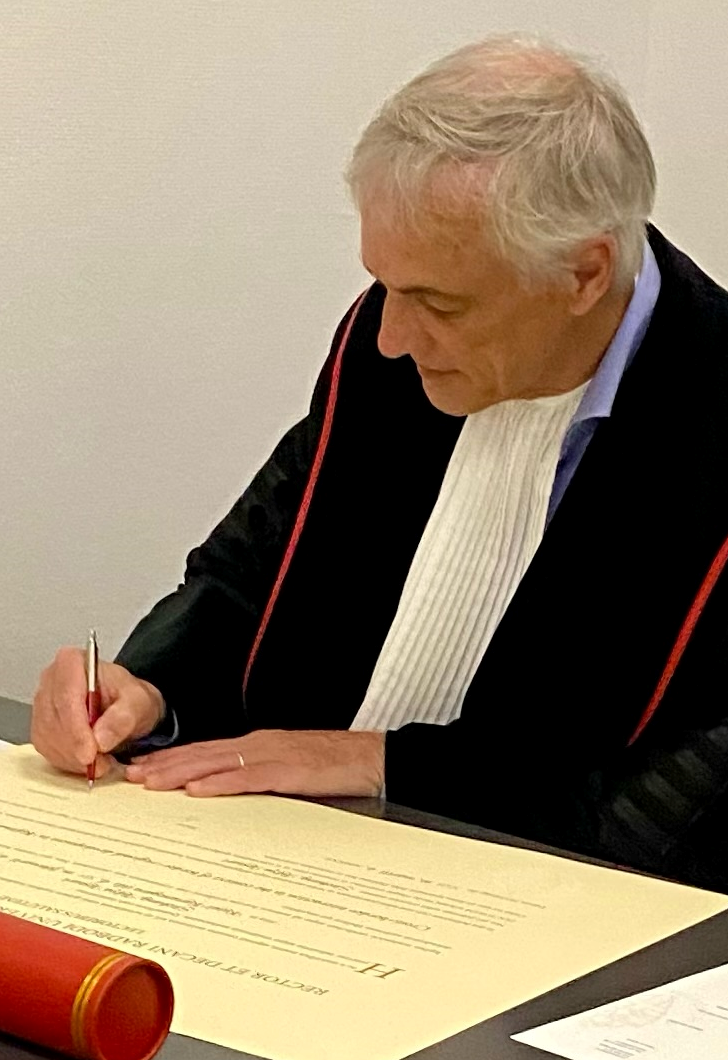
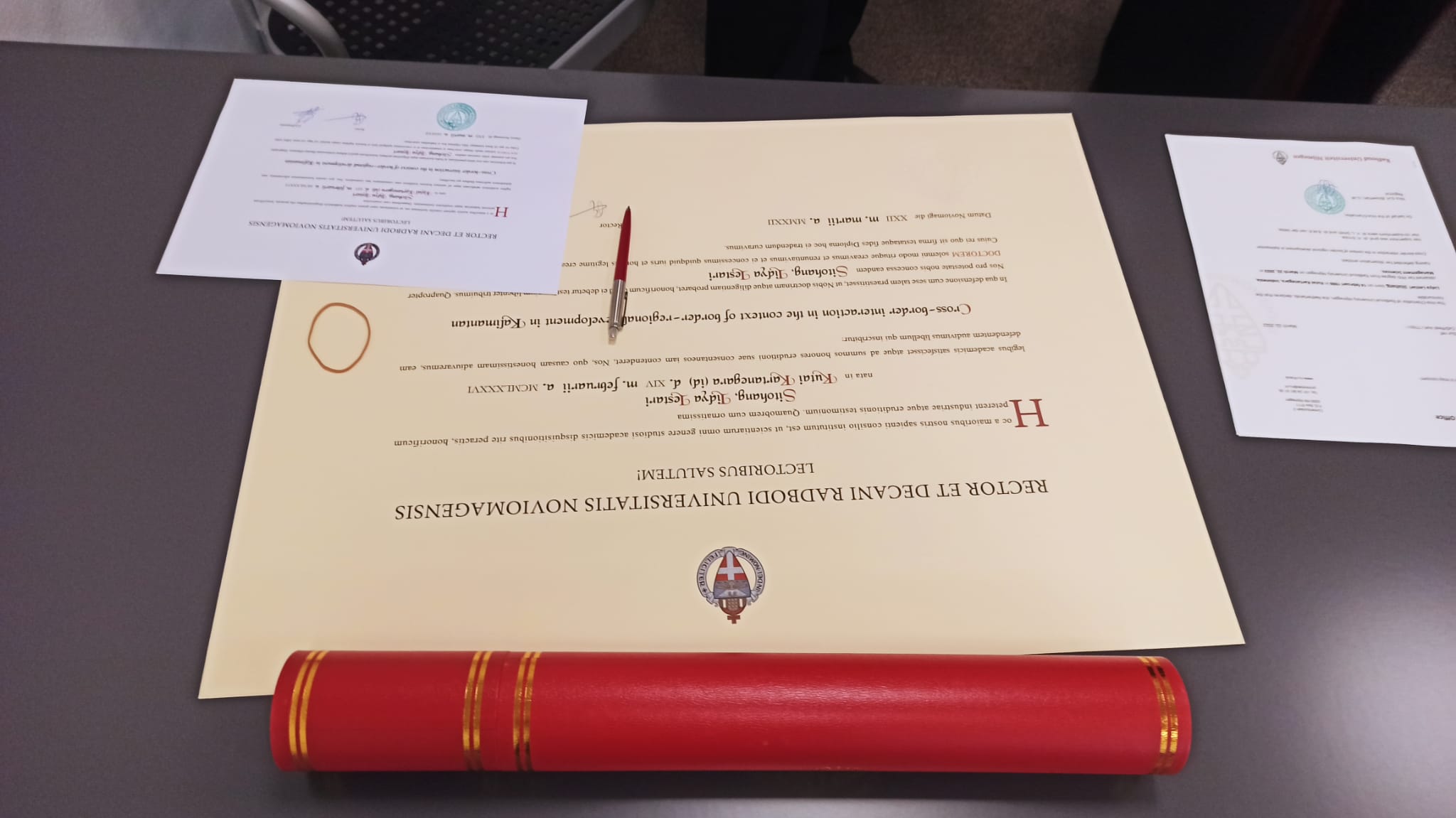
On Tuesday, March 22, Lidya Sitohang (Co-supervised by Dr Lothar Smith and Dr Martin van der Velde) successfully defended her PhD thesis on ‘Cross-border interaction in the context of development in the Indonesian-Malaysian border region’. A thesis in which she nicely shows, that places are more than just ‘bordered’ regions and that in these places, people are making a living and in their everyday cross-border interactions are the source for development of the region. Also, these examples of everyday border crossings show again that we as human beings are always already beyond our own borders. An issue which I regularly refer to also on this blogsite, both in theoretical and philosophical terms as well as in more empirical terms. Especially her subtitle beautifully expresses the embodiment of cross-border interaction: ‘Garuda is on my chest, but my stomach is in Malaysia’.

To quote her summary (click on picture to the right to download the full PhD Thesis): ‘This study investigates the border crossing of Krayan’s locals into Malaysia as a means of meeting their daily needs, which cannot be met in Krayan because of the poor state of development of the region. People living in the more central areas of Indonesia tend to regard the Krayan locals’ border crossing into Malaysia as a sign of decreasing loyalty, and hence a lack of nationalistic pride, towards the State of Indonesia. In contrast, the Krayan locals feel that their sense of nationalism and loyalty to the State of Indonesia is proven through their persistent wish to live in an area at the very edge of the country’s territory, regardless of the lack of development in Krayan. Living on the border with Malaysia, the locals see themselves as guardians of the sovereign territory of the Republic of Indonesia. Another factor is that in Krayan border crossing has long been part of life and existed prior to the formation of the two states. Crossing the border into Malaysia continues to be a matter of visiting family members, where ‘family’ includes all individuals who have a common cultural background and live on either side of the border. Also, as the respondents explained, the poor development in the region forces them to go to Malaysia and this does not compromise their loyalty to the State of Indonesia. The locals mentioned the expression Garuda di dadaku, tapi Malaysia di perutku (Garuda is on our chest, but our stomach is Malaysia), which aptly depict that they hold Indonesia in their hearts even though their livelihoods are supported by Malaysia’ (p. 260).

Even though the Covid-19 crisis slowly but surely does not restrict us in our travelling behaviour and our ‘border crossings’ her defence also showed that this kind of research is still very much needed for the rethinking of the way we deal with borders, as the Dutch Immigration and Naturalisation Service (IND) did not grant her the Visum to defend her thesis live at the University in Nijmegen, 🙁
although especially academic research should by principle be borderless.

But we keep working on it…


PhD Defence by Janneke Rutgers

On January 13, 2022 Janneke Rutgers successfully defended her PhD Thesis “from Panacea to Paradox: The internal dynamics of regional cooperation in Dutch demographically shrinking regions”. She was supervised by Prof. Gert-Jan Hospers and Dr Tamara Metze. As we know, places and regions are not ‘made’ by one single actor, but are co-produced by both civil society actors as well as governmental actors, and the success of this ‘placemaking’ process is very much dependent on how well civil society and government chime together. This was also the topic of a number of other PhD research projects in the framework of our human geography group, although each from another angle. Like in many of my other contributions to this blog site, I always tend to be rather critical if it is presupposed that one single actor or one single cause is responsible for the success or failure of ‘placemaking’. In most cases, these kinds of presuppositions are the result of an unjustified reductionism. In the real world, it is always a combination of different causal factors and circumstances and always the results of how the different actors cooperate.  To be successful in placemaking one always needs to take the full complexity of the situation into account, and one always needs to foster cooperation to be successful. The first is resembled in my own tendency to favour ‘practice theories’, while the latter relates to my preference for ‘inter-action’ instead of individual top-down actions and decision making. From this perspective, the PhD thesis of Janneke Rutgers immediately struck the right chord. Using Urban Regime Theory she empirically shows that what started as ambitious and very open civil society initiatives, gradually developed into more regulated and restricted governmental policies in which the original objectives lost focus, while the continuation of the regulatory regime became a target in itself. This is also the essence of the paradox of regional cooperation she describes with the slogan ‘cooperation well organised, urgency of shrinkage approach disrupted’ (in Dutch: ‘samenwerking goed geregeld, urgentie krimpaanpak ontregeld’). She nicely shows how important it is to keep the balance, and she makes extensive practical recommendations on how to do so. A great piece of research where we can learn from. (Click on the picture to the left to download her PhD thesis)


Civil Society Governance

The division between Government, Markets and Civil Society is increasingly blurring, like many other things in society seem to get blurred. At least from the perspective of Science, they are increasingly addressed as complex phenomena, which can not easily be reduced to one single principle, one single actor, or one single perspective. The world cannot easily be categorised or containerised anymore. More and more we become aware that the phenomena in our society are actually a contingent and contextual interplay of many different actors and forces. For Geographers the contextuality and place-specificness of these complex phenomena and developments are a fascinating object of research and of Place Making. This also changes the theoretical and conceptual frameworks we apply while investigating these phenomena and developments. Relational approaches like Practice Theories, Actor-Network Theories, Assemblage Theories and Complexity Theories are very much en vogue, addressing the relationships between the heterodox factors, conditions, intentions, and materialities, involved.

Today, Dr Benny D. Setianto, successfully defended his PhD Thesis on “Civil Society Governance”. This term in the first instance might sound paradoxical, because isn’t “Government” the opposite of “Civil Society”? Well, in the face of the above referred to developments in society as well as in the way we tend to conceptualise society, it comes not as a surprise. The traditional, rather containerised, concept of Government is described by Benny Setianto as “Government by Design” and contrasted to the role of Civil Society in this same field of government actions, as “Government by Accident”, or maybe one should say “bottom-up government”, “emergent governance”, or “government by coincidence” or even as the “government by the spontaneous coming together of different forces, actors, intentions and circumstances”. Benny Sentianto critically describes this interplay between Government and Civil Society in the shaping of Semarang Environmental Governance, and how this historically came about, and thus he also contributed to the reconceptualisation of the above-mentioned complexities in today’s society.

His PhD Thesis was supervised by Prof. Huib Ernste, Prof. Bas Arts and Dr Ton van Naerssen and is another result of the close cooperation between Unika Soegijapranata Catholic University in Semarang Indonesia and our Geography Department at the Radboud University, and there will be more to come…